

Issue 56 - graphic recording walk through
a peek in my sketchbook, drawing people and a couple of events you won't want to miss.

Hi - I’m Cara, I’ve been a professional Graphic Recorder and business illustrator since 2006.
You’re reading the Visual Edit, a free newsletter for graphic recorders, live illustrators, sketchnoters and business illustrators. If you want to learn how to Be a Graphic Recorder or Graphic Facilitator check out the Graphic Change Academy.

It’s been a busy few weeks with live workshops, conferences, community paths, book illustrations, illustrated interviews, an illustrated slide deck and visualising some academic research findings. So I’m glad to find that April is starting off a little gentler.
Sketching people
I’m a big fan of keeping a sketchbook, in fact I’ve usually got multiple sketchbooks on the go at any one time for different purposes. For a while I’ve kept a small Muji sketchbook in my bag. Each page is the size of a postcard and I’ve limited myself to only using it to sketch people.
Drawing people is something that I’m always looking to improve on in my graphic recording, and a sketchbook that is a bit tatty and sits in the bottom of my bag has been a great tool for making myself keep on doing the work. As a graphic recorder and illustrator I’m rarely drawing people that are realistic, but I do want the people I draw to feel human. Understanding how to draw real people helps.
I sketch when I’m out and about or visiting friends, and my rules (these are just in my head you understand) are that I don’t interfere with whatever’s going on. So no posing, no artificial stillness, and no knowing when the sketching time is going to end. Sometimes, when the subjects are strangers that are in a cafe, or a park where I’m sat, I might have just a handful of seconds before they move on, or totally move position. Sometimes when I’m with friends I have longer, but usually only a few snatched minutes at a time.
For me this keeps it informal and pressure free. If it’s most likely going to be scrappy then I really can’t be upset when it’s, well…scrappy.
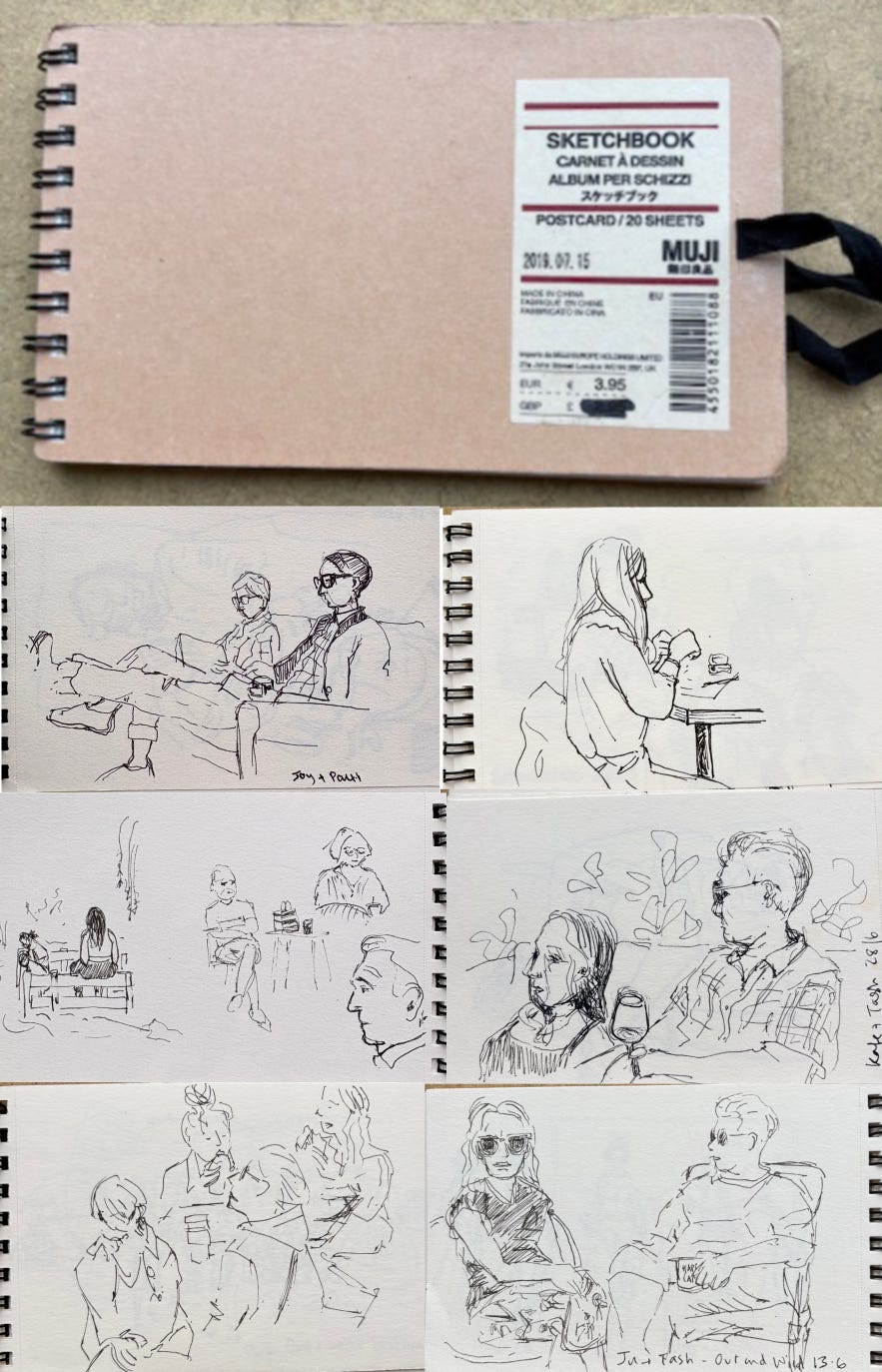
Do you keep a sketchbook? I’d love to know what rules you have in your head for how you use it (I know it’s not just me that does that!)?
Let me know in the comments!
Graphic Recording deep dive
This issue I thought I’d share a live graphic recording with you from a recent event, and break it down into the steps I went through to create it. You might remember back in issue 48 that I did a deep dive into a live, virtual, graphic recording gig where I was streamed into the event from my studio. This time we’re diving into a live, in-person graphic recording where I’m working digitally on my iPad in the room.
Once again I’m using Procreate.
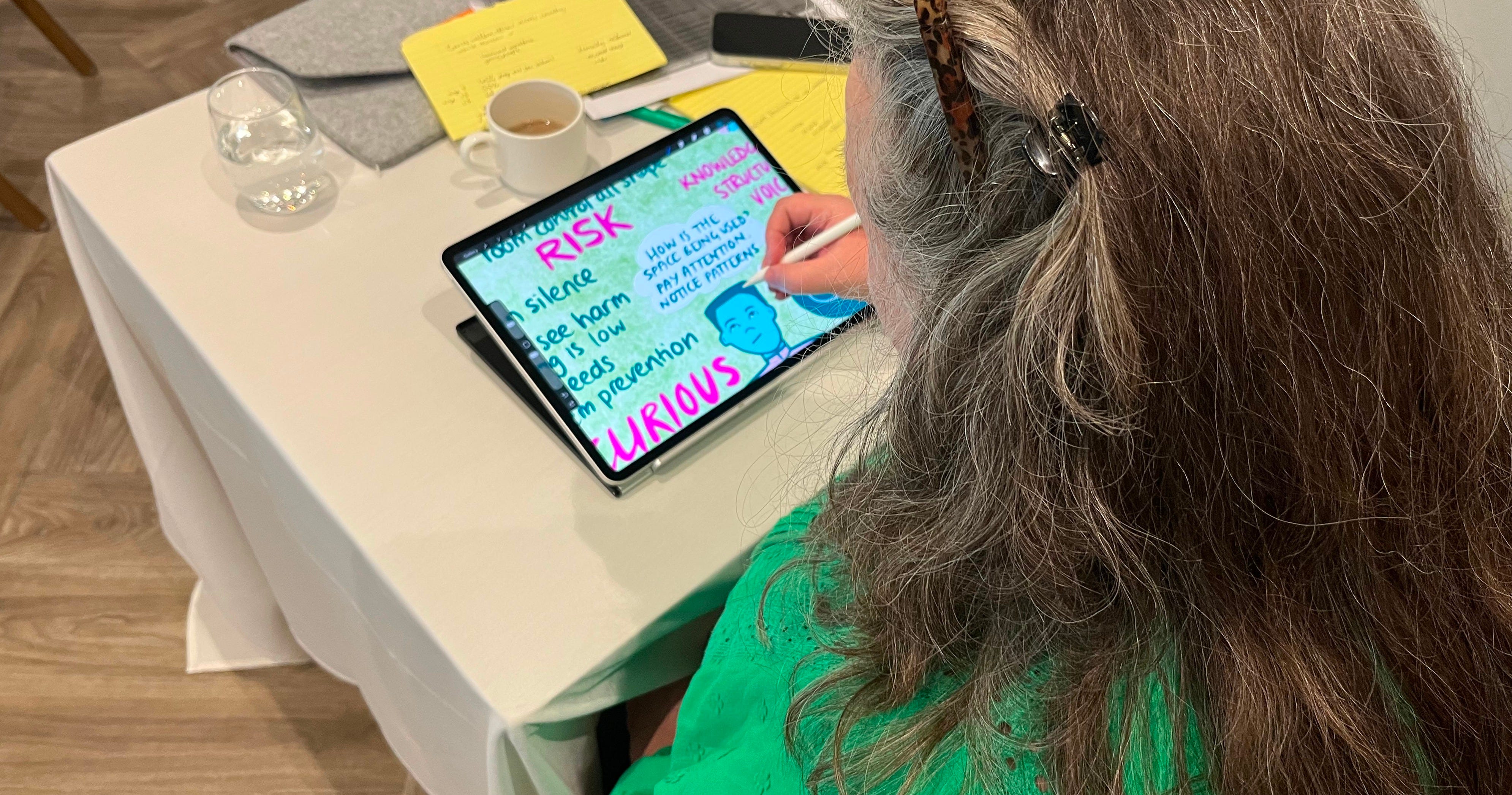
The 3 stages of graphic recording:
Preparation and pre-creation - Preparation starts before the event, where part of briefing with the client is to gather some key information that you’ll ideally want in place before you arrive at the event: Colour schemes, logos and a title for the illustration.
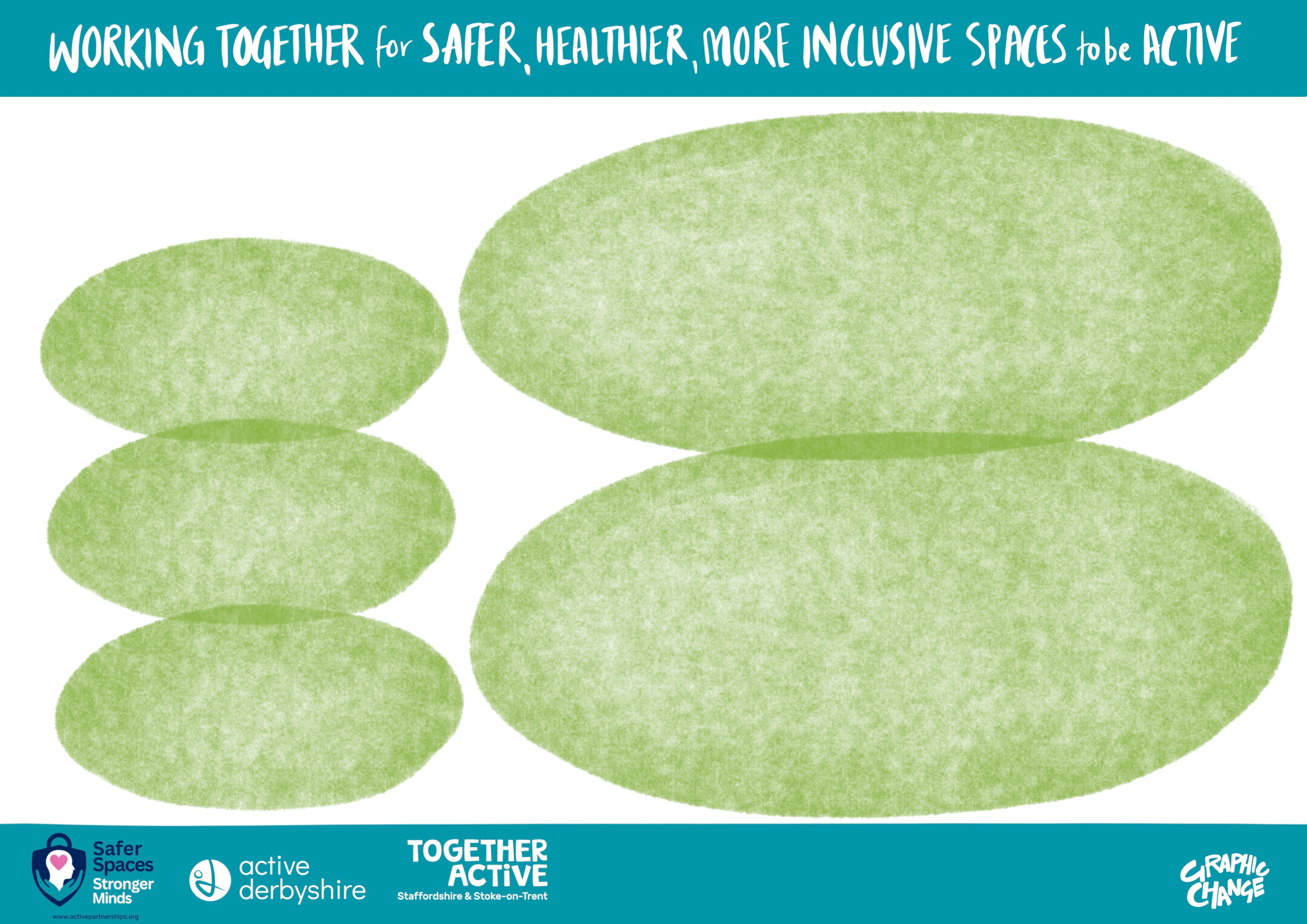
I then go through my agenda weighting exercise (if you’ve done the Be a Graphic Recorder course you’ll know what this is) and I’ll put in my initial framework. In this instance the framework is these green shapes which I’ve drawn in a transparent pen with a bit of texture.
I also spent a little time drawing some theme setting embellishments. They don’t always survive the actual day but, if I have the time, I like to start off with them there.
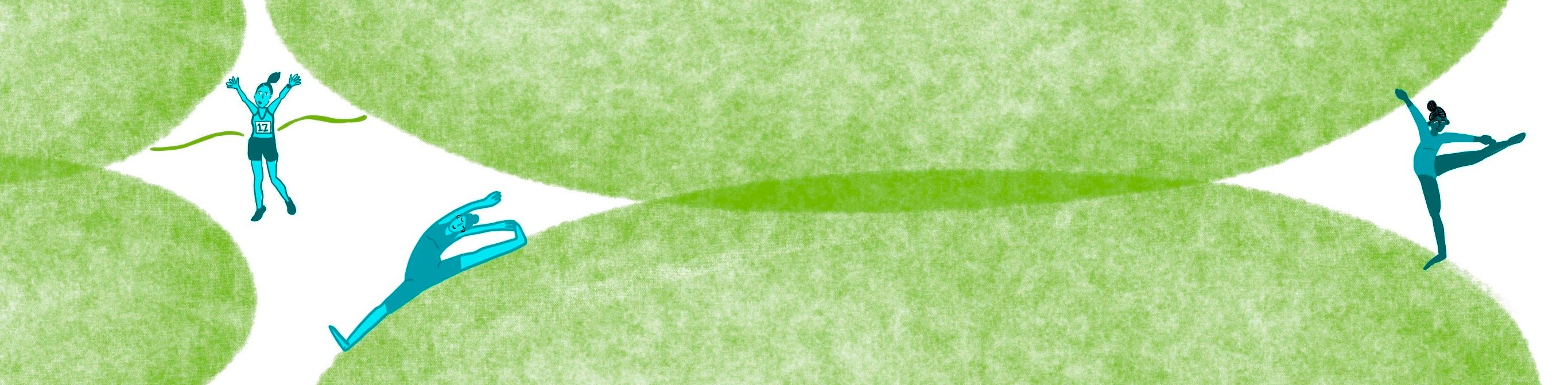
I then use the time waiting for the event to start to add in the titles for each session.
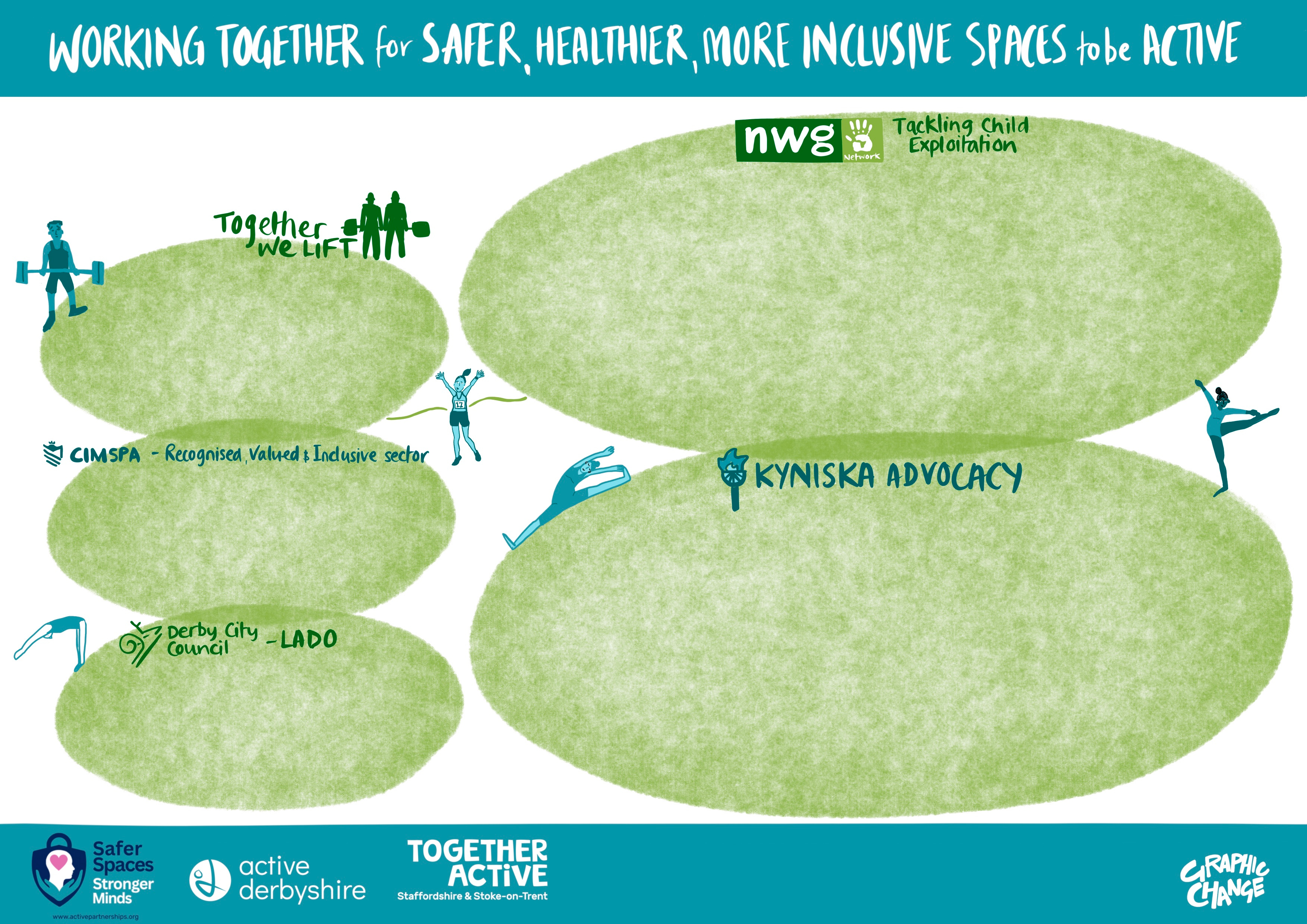
So before the presentations have begun you can see I’ve already got quite a lot on the page.
Working within a framework - Then, for the rest of the day I’m working my way through my pre-created layout, filling in the spaces I’ve created with the live content I’m hearing one section at a time.
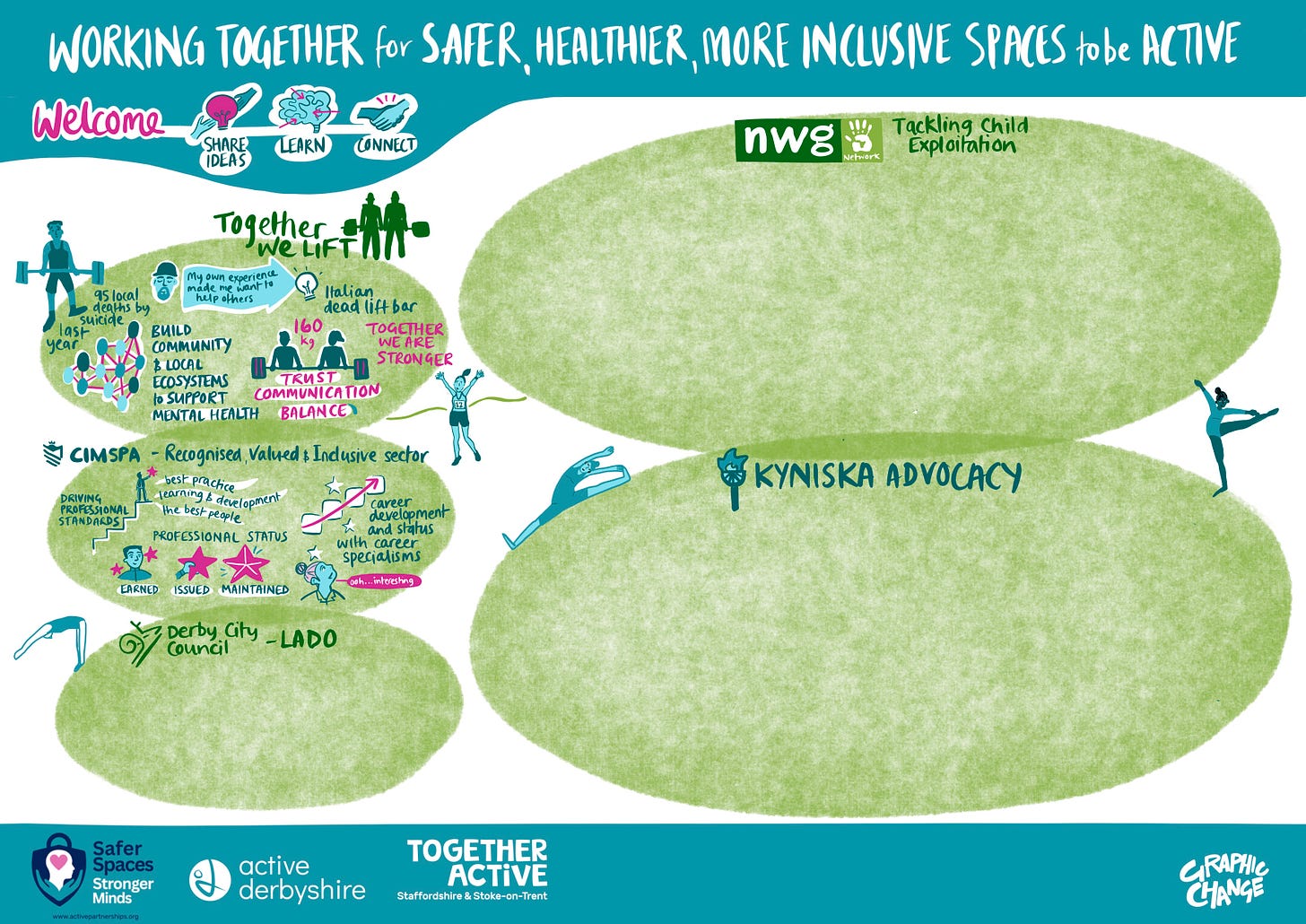
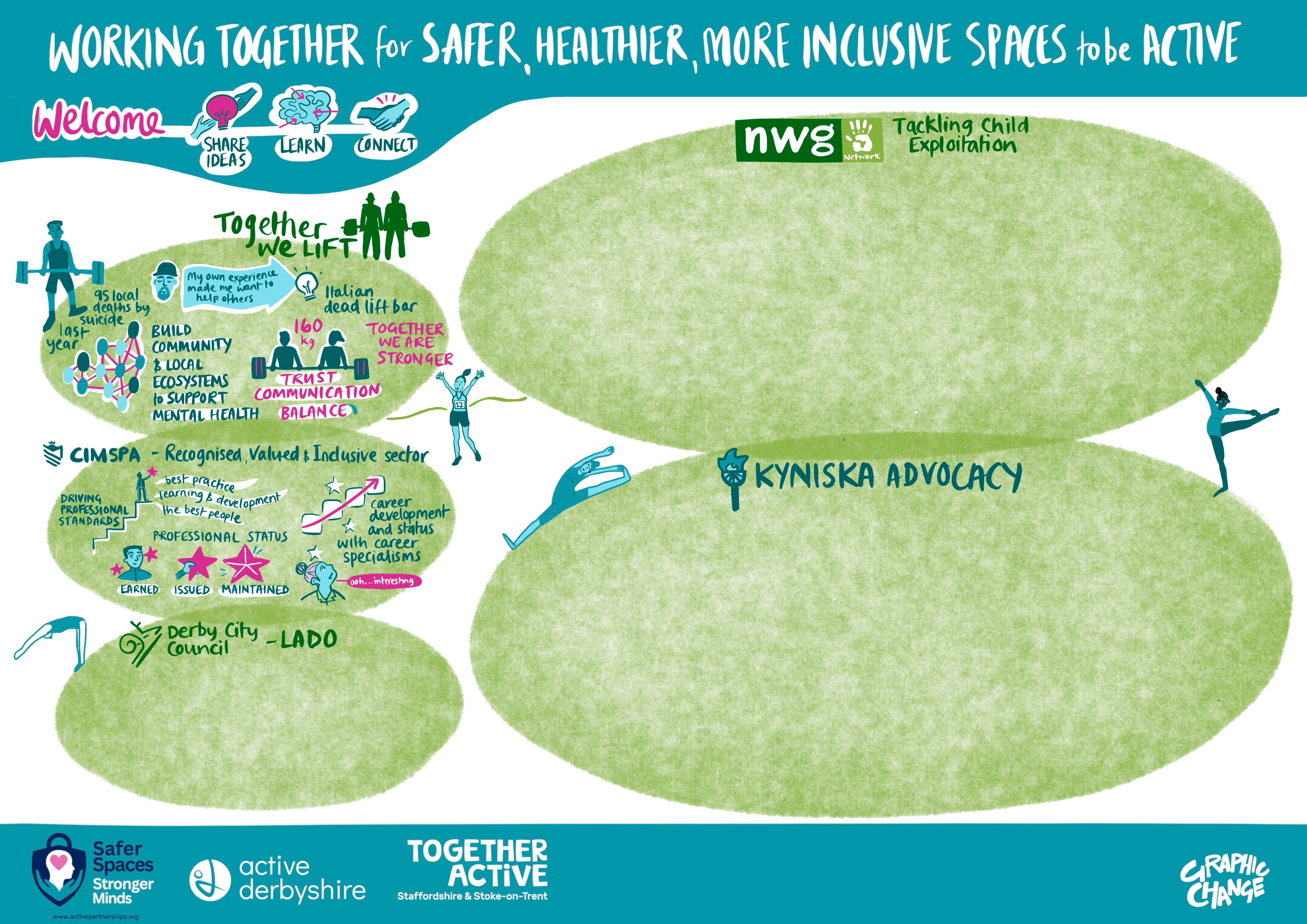
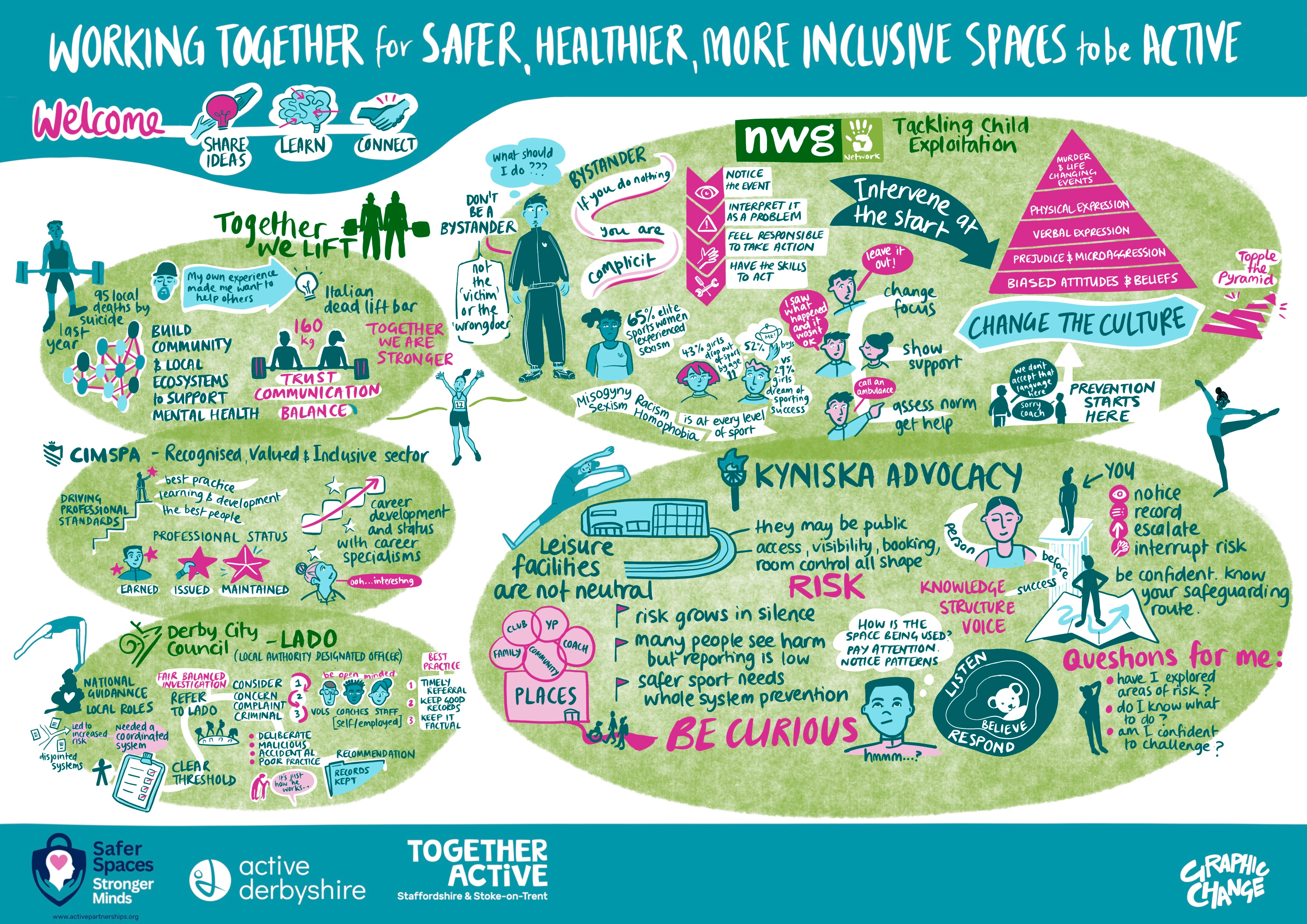
This was quite a straightforward event made up of a series of presentations, so it felt quite easy to contain myself to the framework, listening and filtering to get those key points on the page without over filling the space.
Working in the wild blank spaces - There wasn’t a lot of blank space on this page, and that is because I felt quite confident in the pre-event information which had been quite thorough. Often I know very little detail about the day, and in those instances you would notice I’d leave myself more blank space to work with. There is always the point where I look for something extra that hasn’t been captured during the main sessions. It might be something unplanned, something funny or a great quote that comes up during the day.
In this case I added two extra elements: “It’s not Banter - It’s harmful culture” over on the right hand side. This was something a member of the audience said in a feedback round. Then at the bottom of the page: “Next Steps - What ideas will you turn into action?” This was something that came out of a conversation I had with one of the organisers over lunch. It felt like a perfect way to finish the graphic.
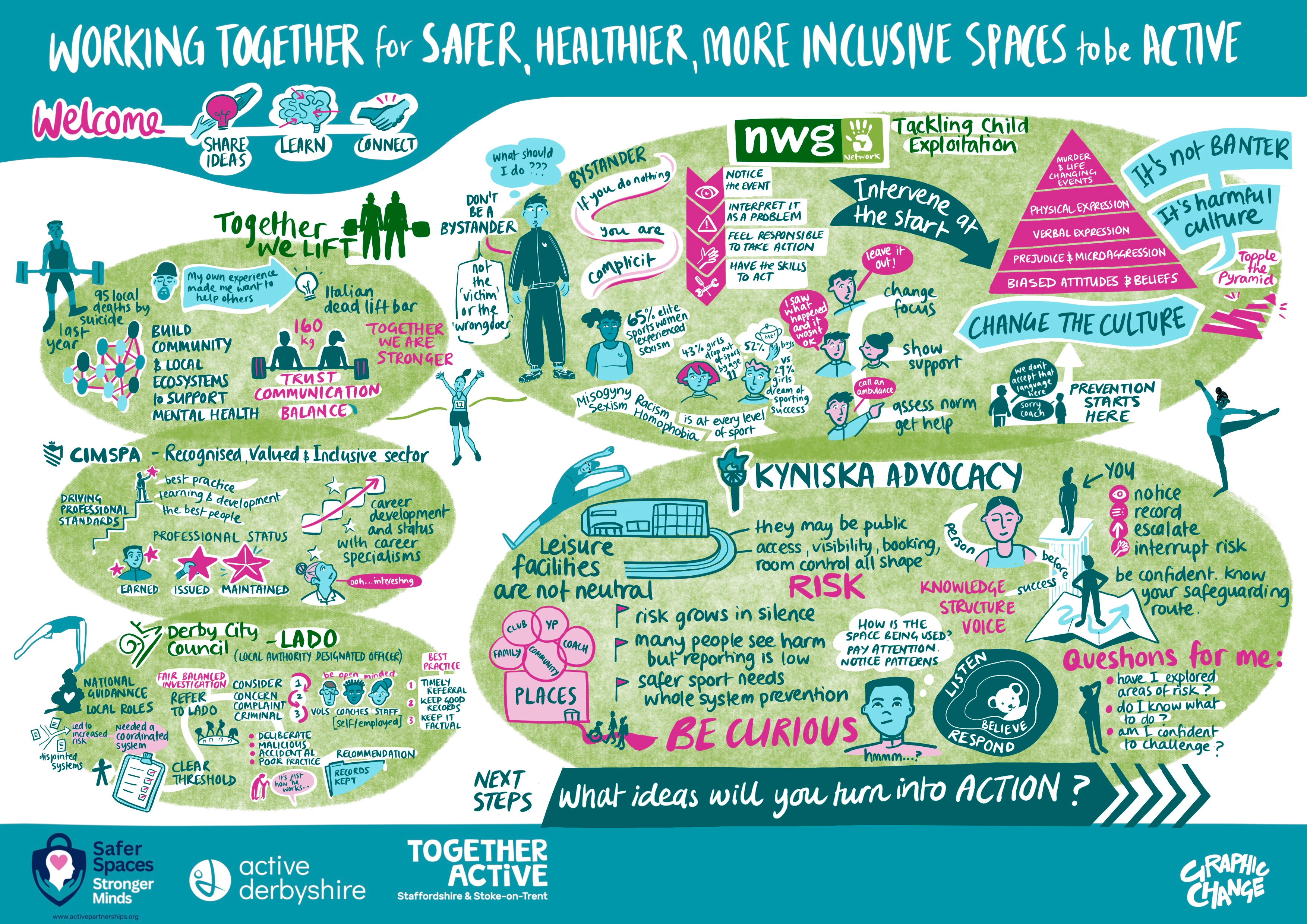
I hope that was useful. If you’ve got any questions about being a graphic recorder then you can leave me a question in the comments here.
Bulletin board
If you have any relevant visual thinking news you’d like us to share, email Natasha at support@graphicchange.com
Get visual in Verona - Fancy a drawing extravaganza in Verona this summer? For the first time EVP (European Visual Practitioners) and ISC (International Sketchnote Community are joining up for a shared event!
Read all about it in Mike Rohde’s substack - here.Face to Face training - Exciting news - on 14th May I’m running a ‘Graphics Masterclass’ at Oxford (UK) Story Museum, teaching graphic facilitation skills face to face in collaboration with Kirsty Lewis and the School of Facilitation.
If you’re a facilitator then you might already have heard of Kirsty Lewis of School of Facilitation and SoFEST fame. (If not then do check her out, she’s a facilitation powerhouse). 5 out of 12 places have sold already and this is the first time I’ve mentioned it (!), so if you fancy uncapping the marker pens and getting visual with me then grab your place now. Find the info here.
Right that’s it for now.


If you’re enjoying The Visual Edit then you can help support us by doing these two simple things:
Tap the LIKE button
Share with a visual thinking friend
Find out more about our courses at the Graphic Change Academy
Buy my book Draw a Better Business
If you enjoy this newsletter, I’d really appreciate you sharing and recommending this publication to your network and visual thinking friends.